How Did We Get to 'Monica'?
Words by
Triston
"Yaps On Record"
I couldn’t tell you what genre my music is… but once I tried to figure it out, I realized genres might have nothing to do with the music and everything to do with the industry.
Hi my name’s Triston & I wanted to explore genre since the lines have blurred over the years with new music projects releasing every week.
What is a genre & where did they come from
So, of course, I had to actually ask what a genre is, and who decided that in the first place. A genre is a category of artistic composition characterized by similarities in form, style, or subject. And we use it everywhere: film, literature, music - without really thinking about it. But I don’t think genre is the real issue - I think the industry is, and genre is just the tool it uses.
A writer from The New Yorker put it really well in a 2021 piece. She said it’s hard to imagine the Grammys without their categories, yet those categories feel increasingly irrelevant to how we actually consume music. And I agree; The categories exist, they just haven’t kept up.
Genre as we know it wasn’t created by artists; it was created by an industry that needed to sort product.
In the early days of the recording industry, in the 1920s, record labels didn’t create genre categories based on how the music sounded. Instead, they created them based on who was making it and who they thought should be buying it if that makes sense. For example, Black artists were repeatedly put in a box only marketed to Black audiences & white artists got put in another. And the wild thing is that the music itself was often the same. Before y’all come at me and try to deny the role that race and politics play in all the arts, the very foundation of our country was built on it. ANYWAYS, like I was saying, white artists were covering, borrowing from, and just legit imitating Black musicians and getting credited as pioneers, while the people they were taking from got paid nothing and were kept out of mainstream audiences.
Today’s genres
Now, of course as time went on, more artists and more genres got developed, but that’s not ancient history; that’s unfortunately the foundation the whole system was built on. Nobody’s sticking to just one style anymore, and everything’s getting mixed up in new and unexpected ways. Music streaming platforms de-center genre as a category system; they thrive on other platforms, and you can find playlists and other collections of songs categorized simply as “late night drives” or as activity categories.
People just open playlists built around a mood or a moment instead of looking for specific genres like rock, rap, or pop BUT a writer named Robin argues that those mood-based playlists still use genre as their point of reference. “Pop isn’t just a genre, it’s a mood.” “The most exciting sounds right now aren’t found within the boundaries of traditional genres.” You can’t claim to transcend something without acknowledging its predecessor. Genre is still doing the work, it’s just got a new fit on.
I’d even say the problem isn’t that genre exists, it’s just that the industry uses it to decide who gets in the room and who doesn’t. And that part hasn’t really changed. Even though we have niche artists and genres discovered through different social platforms like TikTok, we still have award shows historically shying away from honoring genre-benders. We still have artists making genuinely innovative work who never get radio play, never get credited, never get the mainstream moment their music deserves.
Take Toro y Moi, who’s originally known for chillwave beats, but as he’s put out new projects, he’s evolved into something harder to pin down, spanning alternative R&B, hyper pop, indie pop, and more. He just kept evolving, and the category never caught up. He himself said the chillwave label was just a small, coincidental period, not a definition, but of course, once the industry puts you somewhere, it’s really hard to get out.
And that’s the part people don’t like to admit, talent only gets you so far - the infrastructure decides the rest.
Which brings me to Beyoncé. In 2024, she won Best Country Album for Cowboy Carter, and even though country was created by both Black and white influences, people decided to hate on her anyway. Country singer Gavin Adcock even said at a concert that Cowboy Carter "ain't country music" - that artists dedicated to the genre shouldn't have to compete with her for top spots, which is wild to me because you're talking about competing for space in a genre that you don’t own. And look I get it to a degree. When an artist who’s primarily known for R&B steps into a different genre, their audience follows them there, and that shift changes the landscape of who’s consuming that space.
But here’s the thing, Beyoncé didn’t just show up and put a cowboy hat on a pop album. She collaborated with actual country artists, she did the research, she put in the work. This wasn’t a pivot for clout - it was intentional. Beyoncé made an album about exactly that erasure and still got told she didn’t belong. The gatekeeping wasn’t about the music - it never is. LAME.
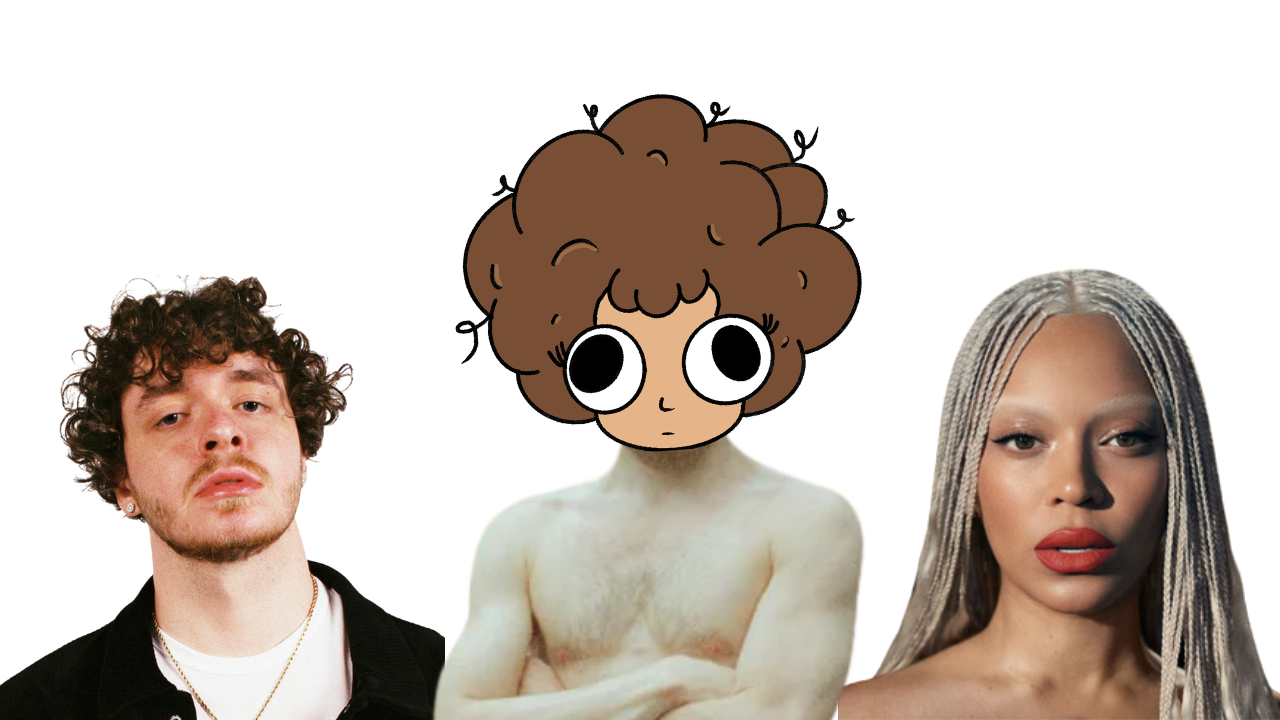
I mean, look at Jack Harlow's recent release Monica. I don’t really wanna give it more publcity but I think it’s important in this nuanced conversation about genre. Even the name itself stirred controversy & a lot of people pointed out that Monica phonetically sounds a lot like the N-word. Jack clarified in a New York Times podcast called Popcast that he'd always loved the name, and him saying “I didn’t mean it that way” doesn’t change the effect. (I still can’t believe no one on his PR team or at Capitol Records said anything or put a stop to it; probably thinking bad publicity is still publicity. Not only was this weird, but it was ASS - y’all can’t tell me that was good Monica.
Leaning into Black musical aesthetics is seen as artistic growth; meanwhile, Black artists who make that exact same music their whole lives aren't described as pushing anything. Their counterparts are framed as revolutionary & praised as bold.
Jack Harlow & Beyoncé are two artists who stepped outside their usual genres. One put in the work, did the research, collaborated with people from that world, and still got told she didn't belong. The other leaned into a culture he'd been adjacent to, and called it evolution. Boundary-pushing only gets credited when someone outside the culture steps into it.
Albeit, if it weren’t for Jack’s weird comments about his album, it wouldn't be getting as much publicity as it is now.
My Question
Anyways, here’s my questions for you - When was the last time you cared what genre a song was before you liked it? Is genre helping you discover music, or just telling you what box to put it in?
You don’t need to know a song is soul to feel the soul stemming from the song BUT if you’re making the music I think it’s a completely different conversation.
If you’re pulling from jazz, R&B, etc. & you don’t know where those sounds came from, who built them, what it cost that artist - that’s not optional, that’s respect & paying homage to the thing you love enough to build on.
As Linda Martell famously said in the intro to “Spaghettii” on Beyoncé’s Cowboy Carter, “Genres are a funny little concept, aren’t they?”
Genre as history matters, but genre as a cage doesn't - that's the difference.
I still don’t know what genre I am, but it sounds like this:
^^ A sped-up demo of mine 😏
What I was listening to as I wrote this:
Lissoms by Toro y Moi
Radio Retaliation by Thievery Corporation
Monica by Jack Harlow (ew)
You Know You Like It (Bondax Remix) by AlunaGeorge
Nothing Sweet by The Sundays
Metric Rules by SPINALL
Thank you so much for reading my yap! If you want to watch the lovely YouTube video paired with this Substack, you can find it below :D
Resources + vids I found insightful:
“THE JOURNEY OF MUSIC GENRES - TRACING THEIR ORIGINS AND EVOLUTION”: DE MODE GLOBAL
How the Grammys have finally come to embrace musical ambiguity — and what that means for Beyoncé
A DIVE INTO THE BLACK HISTORY OF COUNTRY MUSIC: GIVING CREDIT WHERE IT’S DUE
Steve Earle says modern country stars make ‘hip hop for people who are afraid of black people’
Originally published on Substack